Comparison
Night vision vs thermal — which one do you actually need?
Night vision amplifies the light that is already there. Thermal imaging senses heat and needs no light at all. They fail in opposite conditions, which is why the answer is almost never "whichever is cheaper".
Updated
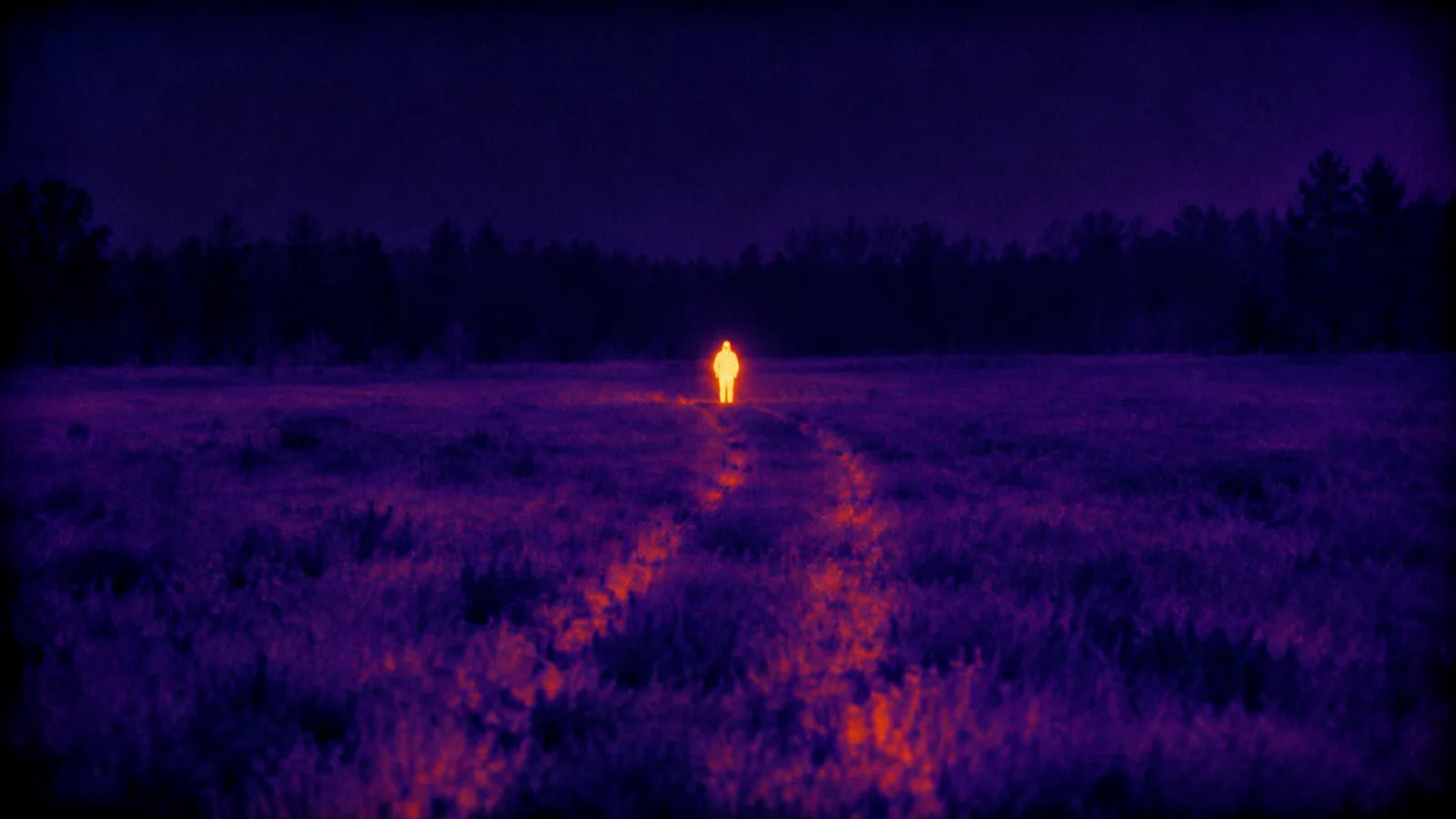
Night vision amplifies the small amount of light already in a scene. Thermal imaging ignores light completely and senses the heat objects emit. They are not two grades of the same thing — they answer different questions, and each one is blind where the other works.
The one-line version
- You want to see what something is — a face, a sign, a trail, a licence plate → night vision.
- You want to know that something is there — a person in a field, a leak in a wall, a bearing about to fail → thermal.
Side by side
| Night vision | Thermal | |
|---|---|---|
| Senses | Visible + near-infrared light | Long-wave infrared (heat) |
| Needs ambient light | Yes, at least some | No, works in total darkness |
| Typical resolution | High — a real scene | Low — 160×120 to 640×480 |
| Recognises a face | Yes | Almost never |
| Through fog, smoke, dust | Poorly | Well |
| Through glass | Yes | No — glass is opaque to it |
| Camouflage | Defeated by it, like your eye | Ignores it; body heat shows |
| Daytime use | No, bright light overloads it | Yes |
| Cost, entry level | Lower | Higher |
Where each one falls apart
Night vision needs photons. Under moonlight it is superb. Under heavy cloud, in a windowless room, inside a container, it shows you nothing — unless it brings an infrared illuminator, which is a lamp, which anyone else with night vision can see. It also hates bright light: a passing car blooms the whole picture.
Thermal needs a temperature difference. On a cold night, a person in a field is unmistakable. On a hot afternoon when the ground is at skin temperature, that same person can nearly vanish. It cannot read a sign, recognise a face or tell you what colour a car is, because it is not receiving that information at all. And it will not look through a window: glass is a mirror in long-wave infrared, so you will photograph yourself.
The cases people actually ask about
Hunting and wildlife. Thermal to find, night vision to identify. This is exactly why people who do it seriously carry both — spotting with thermal and confirming with the other.
Home security. Almost always night vision plus an infrared illuminator. You need to know who, and a thermal blob will not tell you.
Building problems — draughts, damp, insulation. Thermal, with no exceptions. This is the one job night vision cannot touch at all.
Walking, camping, boating at night. Night vision. You are navigating, which means you need the shape of the world, not its temperature.
Search and rescue. Thermal first, by a wide margin. A warm body against cold ground is the single clearest signal in either technology.
And the fused ones
Devices that overlay both exist: a thermal layer marking the hot things on top of an intensified image that tells you what they are. They cost more than both devices bought separately, and for people who need both answers at the same moment they are worth it.
What a phone can do
Neither, honestly — and this is worth saying plainly, because the App Store blurs it constantly.
A phone has no image intensifier and no microbolometer. What it has is a good sensor and a lot of processing, which lets it lift a dim scene well past what your eye manages. Everything after that — the green phosphor grade, the iron palette, the hot and cold markers — is a visual treatment applied to that picture.
That is what Thermal Camera is, and the app says so: twenty looks, live on the camera, no temperature readings and no claim to work in the dark. If you need to find a draught in your wall or a person in a field, buy the hardware. If you want the look, the app is honest about being the look.