
Night vision
Why is night vision green?
Night vision is green because of the phosphor screen inside an image intensifier tube — and because the human eye pulls more detail out of green than out of any other colour.
Updated
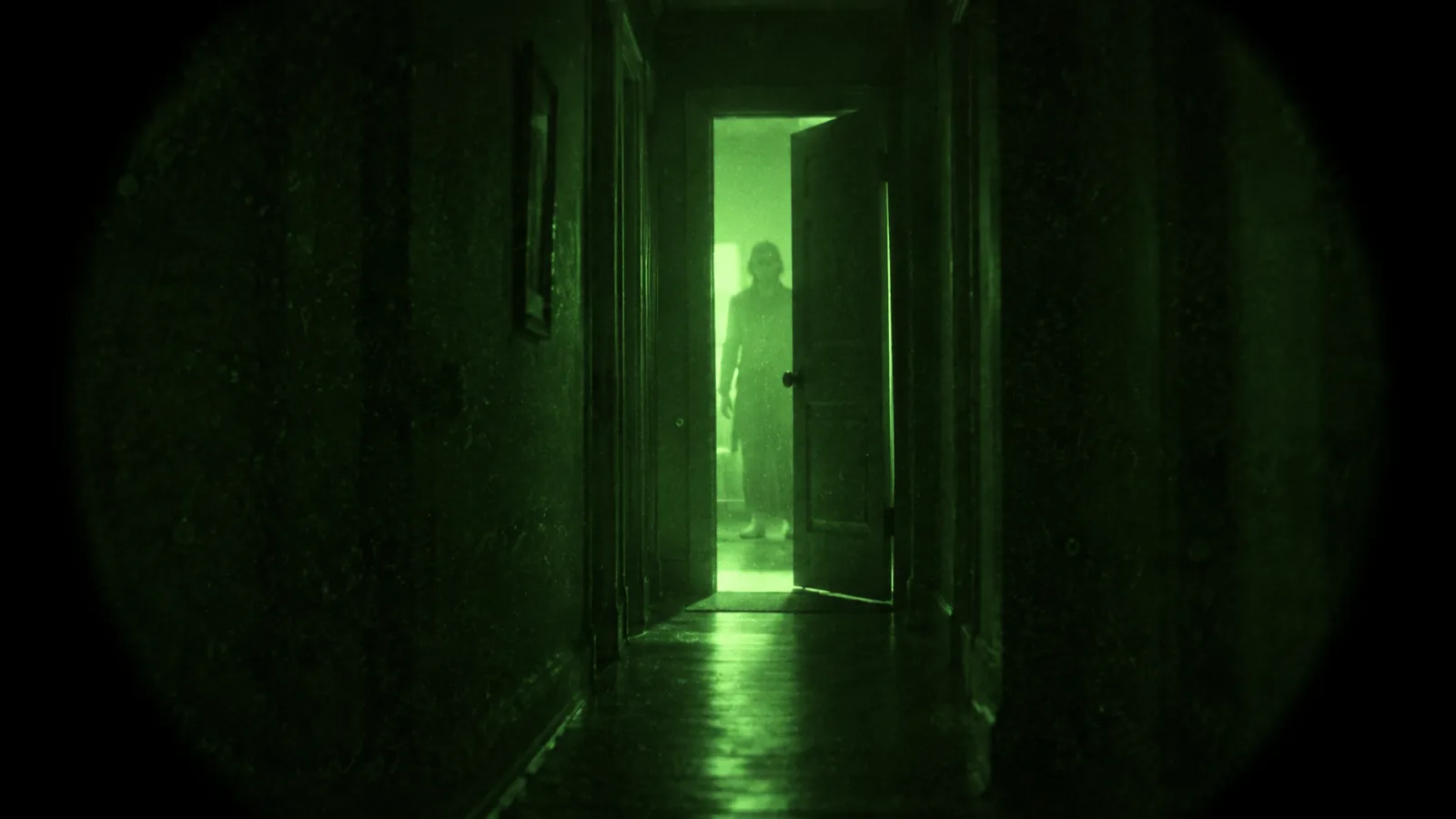
Night vision is green because the screen you are looking at is coated in a green phosphor, and green was chosen because the human eye resolves more detail in green than in any other colour at low brightness. There is no green light out there in the dark; the green is added at the very last step.
What the tube actually does
A classic night vision device is an image intensifier tube, and it works in three stages:
- Photocathode. Dim light — starlight, moonlight, the glow of a distant town — lands on a coated plate that releases an electron for each photon it absorbs.
- Microchannel plate. Those electrons are accelerated into a disc drilled with millions of microscopic tubes. Each electron bouncing down a channel knocks loose more electrons, and a cascade turns one into thousands.
- Phosphor screen. The multiplied electrons slam into a phosphor-coated screen, which lights up where they land.
By the time the picture reaches your eye it has been converted from light to electrons and back to light. The colour information was thrown away at stage one: the photocathode counts photons, it does not sort them by wavelength. The screen can therefore glow in whatever single colour the designers pick.
Why they picked green
Your eye is best at it. Human photopic sensitivity peaks at about 555 nm, which is a yellowish green. At the very low light levels the tube outputs, a green image gives more usable contrast and finer detail than a blue or red one of the same intensity.
The phosphor is efficient. The traditional P43 phosphor turns electron energy into visible light very efficiently and has a persistence that smooths flicker without smearing movement.
It preserves dark adaptation reasonably well. Look at a bright white screen in the dark and your night vision is wrecked for twenty minutes. A dim monochrome green screen is much kinder, and a soldier or a pilot has to be able to look away from the eyepiece and still function.
Monochrome hides the noise. An intensified image is full of scintillation. In a single colour that reads as texture. In colour it would read as a mess.
White phosphor is now a thing
Newer tubes use a P45 white phosphor that produces a grey-scale image instead of a green one. Users report it is easier on the eyes over a long night, that faces and terrain look more natural, and that fine contrast in shadows is easier to judge. Green tubes are still made, they are usually cheaper, and plenty of people simply prefer them.
So “night vision is green” is a statement about a generation of hardware, not a law of physics.
Digital night vision is different again
A digital device has no tube. It is a very sensitive CMOS sensor, usually with the infrared cut filter removed and often paired with an infrared illuminator — an LED at 850 nm (a faint red glow if you look straight at it) or 940 nm (effectively invisible). The sensor sees the scene lit by light nobody else can see.
The output is naturally greyscale, and manufacturers frequently tint it green anyway, because that is what night vision is supposed to look like. Trail cameras, security cameras and phone apps all do this. It is now a visual convention, like the beep of a heart monitor in a film.
Which is what our app is doing
The night-vision looks in Thermal Camera are that convention, deliberately: the camera image is brightened, its contrast pushed, and the result tinted with a green or amber phosphor curve, with the grain and the vignette of a real tube. It is a filter, in real time, on a live camera.
What it is not is an intensifier. Your phone camera cannot multiply photons, so it still needs some light to work with — a dim room, yes; a sealed basement, no. Anything that promises true night vision from a stock phone camera is selling you a tint.